Skip to Content
Exit

The Impact of Supply Chain Localization on Automotive Fastener Procurement Introduction

Tag Archive: automotive fastening

  1. The Impact of Supply Chain Localization on Automotive Fastener Procurement Introduction

    Comments Off on The Impact of Supply Chain Localization on Automotive Fastener Procurement Introduction

    A freight port with overlay of global logistics map

    In today’s dynamic automotive industry, supply chain efficiency is a key factor in maintaining competitiveness. The recent global supply chain disruptions, rising tariffs, and increasing transportation costs have highlighted the need for supply chain localization. For automotive fastener procurement, localization ensures cost reduction, enhanced reliability, and improved lead times, allowing OEMs and Tier suppliers to maintain uninterrupted production.

    Challenges in Global Fastener Sourcing


    Traditionally, automotive manufacturers have relied on a global supply chain to source fasteners. However, this approach presents multiple challenges:


    • Increased tariffs and trade restrictions: Importing fasteners from overseas is becoming more expensive due to evolving trade policies.
    • Supply chain disruptions: Geopolitical instability, pandemics, and shipping delays impact production schedules.
    • High logistics costs: Rising fuel prices and freight costs increase overall procurement expenses.
    • Inconsistent quality standards: Variations in manufacturing practices across regions can lead to quality concerns.


    The Advantages of Supply Chain Localization

    man with supply chain results for company decisions

    By localizing fastener procurement, automotive manufacturers can overcome these challenges while achieving multiple strategic benefits.


    1. Cost Reduction and Financial Stability
      • Lower transportation costs: Sourcing from regional suppliers minimizes freight and customs expenses.
      • Reduced tariffs and duties: Domestic sourcing eliminates import taxes and trade restrictions.
      • Inventory optimization: Shorter supply chains allow for leaner inventory management and reduced carrying costs.
    2. Improved Lead Times and Supply Chain Resilience
      • Faster delivery cycles: Local suppliers provide shorter lead times, enabling agile production scheduling.
      • Minimized risk of disruptions: Reduced reliance on overseas suppliers lowers exposure to delays and shortages.
      • Consistent material availability: Ensures just-in-time (JIT) inventory strategies can be maintained effectively.
    3. Enhanced Quality Control and Compliance
      • Closer collaboration with suppliers: Direct engagement with regional suppliers improves quality consistency.
      • Adherence to local regulations: Ensures compliance with North American automotive industry standards.
      • Greater flexibility in customization: Facilitates rapid response to engineering changes and design modifications.


    Case Study: Successful Localization Strategy with EFC International

    Map of global supply chain network

    A leading North American automotive manufacturer faced supply chain inefficiencies due to its dependence on imported fasteners. By partnering with EFC International, the company implemented a localization strategy that resulted in:


    • 30% reduction in logistics costs by sourcing from North American fastener manufacturers.
    • 40% improvement in lead times, ensuring on-time production schedules.
    • Standardized quality assurance, meeting stringent OEM specifications.
    • Elimination of tariff-related cost increases, leading to significant financial savings.


    Best Practices for Implementing a Localized Fastener Procurement Strategy


    For automotive manufacturers looking to localize their fastener supply chain, the following steps are recommended:


    1. Conduct a Supply Chain Audit
      • Identify reliance on overseas suppliers and evaluate the impact on costs and lead times.
      • Assess the feasibility of shifting procurement to domestic or nearshore suppliers.
    2. Partner with a Reliable Local Supplier
      • Engage with distributors like EFC International, which offer a broad network of North American fastener manufacturers.
      • Ensure suppliers align with automotive industry compliance and quality standards.
    3. Optimize Inventory and Logistics
      • Implement regional warehousing to improve distribution efficiency.
      • Adopt a just-in-time (JIT) strategy to minimize excess inventory costs.
    4. Leverage Technology for Visibility and Efficiency
      • Utilize ERP and supply chain management systems to improve tracking and forecasting.
      • Integrate digital tools for supplier collaboration and quality control.


    Conclusion


    The shift toward supply chain localization in automotive fastener procurement is a strategic move that enhances cost efficiency, operational agility, and overall supply chain resilience. As an industry leader, EFC International offers expertise in local supplier engagement, inventory management, and quality assurance, helping manufacturers achieve a seamless transition to a localized procurement model.


    For more information on how EFC International can support your localization strategy, contact us today.


    Written by:

    Chris Kanaan

    Senior Vice President of Sales, Global Transportation 

    Chris.Kanaan@efc-intl.com

    https://www.efc-intl.com/


    Frequently asked questions about supply chain localization

    1. What is supply chain localization in automotive fastener procurement?

    Supply chain localization in automotive fastener procurement refers to the strategy of sourcing fasteners from regional or domestic suppliers rather than relying on global sourcing. This approach aims to reduce costs, improve lead times, and enhance supply chain resilience for automotive manufacturers.

    2. How does localization benefit automotive fastener procurement?

    Localization offers several benefits for automotive fastener procurement:

    • Cost reduction: Lower transportation costs, reduced tariffs, and optimized inventory management
    • Improved lead times: Faster delivery cycles and minimized risk of disruptions
    • Enhanced quality control: Closer collaboration with suppliers and better adherence to local regulations
    • Increased supply chain resilience: Reduced dependence on overseas suppliers and consistent material availability

    3. What challenges does global fastener sourcing present to automotive manufacturers?

    Global fastener sourcing poses several challenges for automotive manufacturers:

    • Increased tariffs and trade restrictions
    • Supply chain disruptions due to geopolitical instability and pandemics
    • High logistics costs
    • Inconsistent quality standards across regions

    4. How can automotive manufacturers implement a localized fastener procurement strategy?

    To implement a localized fastener procurement strategy, automotive manufacturers should:

    • Conduct a supply chain audit to identify reliance on overseas suppliers
    • Partner with reliable local suppliers like EFC International
    • Optimize inventory and logistics through regional warehousing and just-in-time strategies
    • Leverage technology for improved visibility and efficiency in supply chain management

    5. What role do suppliers like EFC International play in supply chain localization?

    Suppliers like EFC International play a crucial role in supply chain localization by:

    • Offering a broad network of North American fastener manufacturers
    • Ensuring compliance with automotive industry standards
    • Providing expertise in local supplier engagement and inventory management

    Supporting manufacturers in achieving a seamless transition to a localized procurement model

  2. The Value of a Distributor in Lightweight Fastener Selection and Application Engineering

    Comments Off on The Value of a Distributor in Lightweight Fastener Selection and Application Engineering

    Man designing an upcoming car via computer software

    As fastener technology advances, the push toward lightweighting in fastener designs continues to evolve. Manufacturers across industries—particularly in automotive, industrial OEMs, and electronics—are shifting from traditional steel fasteners to alternative materials such as aluminum, carbon fiber, and high-performance plastics to reduce weight while maintaining performance. However, selecting the right fastener solution involves more than just material substitution. It requires a deep understanding of application requirements, performance standards, and cost considerations. This is where a knowledgeable distributor provides significant value.

    The Role of a Distributor in Lightweight Fastener Selection

    Navigating the complexities of lightweighting requires expertise in material science, application engineering, and industry-specific requirements. As a distributor, we act as a bridge between manufacturers and end users, ensuring that our customers receive the most effective fastener solutions tailored to their needs. Our expertise in product selection ensures that engineers and purchasing teams can choose from a wide range of materials, including:

    • Aluminum
    • Carbon fiber
    • Multi-material assemblies
    • Nylon
    • Plastic

    These material alternatives offer significant weight reductions without sacrificing strength, reliability, or corrosion resistance. By working closely with our customers, we help identify the best options that align with both performance expectations and cost constraints.

    Application Engineering:
    Ensuring Compatibility and Performance

    Lightweighting presents unique challenges, such as differing panel thicknesses, varied tolerances, and increased retention requirements. Our team of application engineers assists in overcoming these hurdles by offering:

    • Material compatibility analysis to prevent galvanic corrosion and ensure long-term durability.
    • Custom fastener solutions that meet industry regulations and OEM specifications.
    • Guidance on fastening interfaces to reduce complexity and assembly costs.

    Our engineering support ensures that lightweight fasteners perform optimally in demanding environments, from high-vibration automotive applications to extreme temperatures in industrial applications.

    Broad Market Expertise:
    Addressing Unique Customer Challenges

    One of the key advantages of working with a distributor is our ability to engage with multiple customers across various industries, giving us a broad perspective on market challenges and emerging trends. By leveraging our experience across diverse applications, we can identify common pain points and develop optimized solutions that meet the unique requirements of each customer.

    Our ability to understand the nuances of different markets allows us to:

    • Anticipate industry trends and proactively offer solutions that enhance performance and efficiency.
    • Provide cross-industry insights, applying successful strategies from one sector to another to drive innovation.
    • Customize solutions that address specific customer needs, balancing factors like weight reduction, cost efficiency, and durability.

    This extensive market knowledge enables us to serve as a strategic partner, not just a supplier, delivering tailored recommendations that drive success for each customer.

    Innovations in Assembly and Manufacturing

    A 3D printer manufacturing a custom prototype component

    Reducing assembly costs and improving efficiency are critical in lightweight fastener adoption. We provide customers with insights into the latest advancements, such as:

    • 3D Printing for Prototyping and Production: Additive manufacturing allows for rapid prototyping and the creation of complex geometries that traditional manufacturing cannot achieve. This is particularly valuable for custom fasteners and low-volume production.
    • Multi-Material Assemblies and Overmolding: By integrating multiple materials, such as mild steels with plastics or rubber, manufacturers can achieve the strength of traditional metals at a fraction of the weight and cost.

    By staying ahead of these technological advancements, we help customers make informed decisions that enhance both performance and cost-effectiveness.

    Meeting Industry-Specific Demands

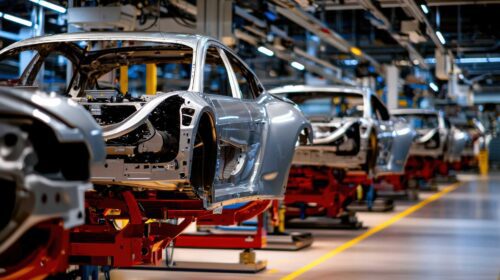
    An electric vehicle manufacturing assembly line

    Each industry has its own unique lightweighting challenges, and our role as a distributor is to ensure that customers receive solutions tailored to their sector.

    • Automotive & EVs: The transition to electric vehicles requires lightweight fasteners for battery packs, structural components, and thermal management systems. Our expertise ensures that fasteners meet safety, heat resistance, and regulatory requirements.
    • Industrial OEMs & End Users: Manufacturers in heavy equipment, construction, and general industrial applications are increasingly looking for lightweight solutions to enhance efficiency and reduce operational costs. Our expertise in high-strength, lightweight fasteners ensures that durability and performance are maintained while reducing overall system weight.
    • Electronics: Miniaturization and lightweight materials are crucial in consumer electronics, and we provide fasteners that optimize space and enhance durability.

    The True Cost of Lightweighting

    While lightweight fasteners may have a higher initial price compared to conventional steel options, the long-term benefits—such as fuel efficiency in vehicles, improved performance in electronics, and reduced manufacturing costs—often outweigh the upfront costs. We work closely with customers to analyze the total cost of ownership, ensuring they receive the best return on investment.

    Partnering for Future Success

    Lightweighting is not just a trend; it is an essential strategy for modern engineering. As a trusted distributor, we provide more than just fasteners—we offer expertise, innovation, and tailored solutions that drive efficiency and performance across industries. By collaborating with OEMs, engineers, and procurement teams, we help shape the future of fastener technology and ensure that manufacturers have the right solutions for evolving market demands.

    No matter the industry, we are here to provide the insights and products needed to achieve lightweighting success.


    Lightweight Fastener FAQs

    Why is lightweighting important in fastener design across industries?

    Lightweighting in fastener design is crucial for industries like automotive, industrial OEMs, and electronics to reduce weight while maintaining performance. By transitioning from traditional steel fasteners to materials like aluminum, carbon fiber, and high-performance plastics, manufacturers can achieve improved fuel efficiency, enhanced durability, and cost savings over time.


    How does a distributor assist in lightweight fastener selection?

    Distributors provide expertise in material science and application engineering to help manufacturers select the best lightweight fasteners. They offer tailored solutions by analyzing material compatibility, preventing galvanic corrosion, and ensuring compliance with industry standards. This ensures optimal performance while addressing unique customer challenges.


    What are the benefits of using alternative materials like aluminum or nylon for fasteners?

    Alternative materials such as aluminum, nylon, and carbon fiber offer significant weight reductions without compromising strength, reliability, or corrosion resistance. These materials are ideal for applications requiring high durability and performance in demanding environments like automotive and industrial sectors.


    How do distributors contribute to innovation in lightweight fastener manufacturing?

    Distributors play a key role by introducing advancements such as 3D printing for prototyping and production, multi-material assemblies, and overmolding techniques. These innovations enable manufacturers to create complex geometries and integrate lightweight materials for improved efficiency and reduced costs.


    What industries benefit most from lightweight fastener solutions?

    Industries such as automotive (especially EVs), industrial OEMs, and electronics benefit significantly from lightweight fasteners. These solutions address specific needs like battery pack safety in EVs, operational cost reduction in heavy equipment, and space optimization in miniaturized electronics.

© 2026 EFC International, All Rights Reserved | Site created by Thomas Marketing Services and powered by Navigator Platform

ISO 9001:2015